A garage door spring usually gives out with a loud bang, and the door that opened fine yesterday suddenly won't budge past a few inches. If you're lining up garage door spring repair in Brandon, knowing how the job should go makes it easier to spot a careful technician and ask the right questions. Most homes here run on torsion springs mounted above the door, which do the heavy lifting for your opener. When one snaps, the safest path is spring replacement service in Brandon from a trained tech, since these springs hold enough tension to cause serious injury. In this guide, we'll cover how local humidity wears springs down, what to do while you wait, how a proper replacement visit works, and which spring options are worth asking about.
- How Brandon Humidity Shortens Garage Door Spring Life
- What to Do Before Your Garage Door Technician Arrives
- How a Garage Door Spring Replacement Visit Should Go
- Measuring the Old Garage Door Springs
- Replacing the Springs and Worn Door Hardware
- Balancing and Testing the Garage Door
- Garage Door Spring Upgrades Worth Asking About in Brandon
- Get Your Brandon Garage Door Back to Lifting Smoothly
- Frequently Asked Questions
- Should both garage door springs be replaced at the same time?
- Is it safe to use the opener with a broken spring?
- What size spring does my garage door need?
- Are rust-resistant garage door springs worth it in Florida?
- What else should be checked during a spring repair?

How Brandon Humidity Shortens Garage Door Spring Life
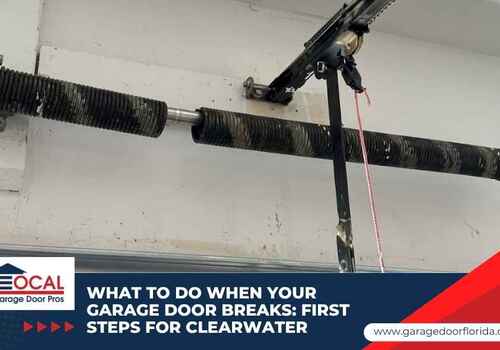
Standard torsion springs are typically rated for about 10,000 open-and-close cycles. For a door used four times a day, that works out to roughly seven years, and heavier use cuts it shorter. Moisture is the other big factor in Brandon, where muggy summers and regular afternoon storms keep garages damp for months at a time.
DASMA's guidance on spring cycle life notes that springs should be kept dry, because rust leaves small pits where fatigue cracks can start and spread. That's why a spring in a humid garage can fail well before it reaches its rated cycle count. Usage matters too, and the common reasons springs snap go beyond weather alone.
What to Do Before Your Garage Door Technician Arrives
A broken spring leaves the full weight of the door on the opener, the cables, and anyone who tries to lift it. These precautions keep the damage from spreading to other parts while you wait:
- Stop Using the Opener: Running the motor against a door with no spring support can strip gears and bend the rail.
- Leave a Raised Door Alone: If the door is stuck open, don't pull the red emergency release cord. Without spring tension, the door can drop fast.
- Keep Kids and Pets Away: A door missing its counterbalance can shift without warning, so treat the area like a work zone.
- Take Notes for the Tech: Jot down what you heard, then snap a photo of the springs from a safe distance.
If your car is trapped inside, read up on opening a door with a broken spring before you try, and always have a second person helping.
How a Garage Door Spring Replacement Visit Should Go
A careful spring replacement follows the same basic order on almost every door. Knowing that order ahead of time makes it easier to tell when a technician is skipping steps.
Measuring the Old Garage Door Springs
Springs aren't one-size-fits-all, and the right replacement depends on your door's weight and height. A good technician measures the old spring before installing anything, checking these details:
- Wire size, which is the thickness of the coil itself.
- Overall length and inside diameter of the spring.
- Wind direction, since left-wound and right-wound springs aren't interchangeable.

Replacing the Springs and Worn Door Hardware
Unwinding a torsion spring is the riskiest part of the job, so it calls for proper winding bars and a door that's locked in place. Once the tension is safely released, the work moves in this order:
- Clamp the door to the track so it can't move.
- Unwind and remove the old springs, then mount the new ones on the shaft.
- Inspect the cables, drums, and center bearing, and replace anything badly worn.
Balancing and Testing the Garage Door
New springs only do their job when they're wound to match the weight of the door. These final checks confirm everything is safe before the tech packs up:
- Wind the springs to the correct number of turns and tighten the set screws.
- Lift the door by hand to about waist height and let go. A balanced door stays put.
- Reconnect the opener and run several full cycles, including a test of the auto-reverse safety feature.
Garage Door Spring Upgrades Worth Asking About in Brandon
A broken spring is a good time to rethink the parts above your door. These options come up often for homes with humid garages and busy daily use:
- Replacing Both Springs Together: On a two-spring door, both springs have run the same number of cycles. When one breaks, the other is usually close behind, so swapping the pair can save you a second service call.
- Higher-Cycle Springs: If the garage is your family's main way in and out, springs with a higher cycle rating stretch the time between replacements.
- Rust-Resistant Finishes: Galvanized or coated springs stand up to moisture better than bare oil-tempered steel. Ask whether one is available for your door's size.
- Extension to Torsion Conversion: Older doors with side-mounted extension springs can often switch to a torsion setup for smoother, more controlled lifting.
Get Your Brandon Garage Door Back to Lifting Smoothly
A broken spring is stressful, but it's one of the most fixable problems a garage door can have. Keeping springs dry, staying off the opener once one snaps, and knowing what a careful replacement looks like all go a long way toward a safe repair that lasts. Asking about a matched pair, a higher cycle rating, or a rust-resistant finish can also stretch the time before you deal with this again in Brandon's humid climate. When it's time for a replacement, Local Garage Door Pros has a Brandon location and is available 24/7 to get your door balanced and lifting smoothly again.

Frequently Asked Questions
Should both garage door springs be replaced at the same time?
In most cases, yes, if your door uses two springs that were installed together. Both have handled the same number of cycles, so the second one is often near the end of its life too. Replacing the pair also keeps the door evenly balanced.
Is it safe to use the opener with a broken spring?
No, running the opener with a broken spring puts the full weight of the door on the motor and rail. That strain can strip gears, bend parts, or let the door drop without warning. Leave the opener off until a technician replaces the spring.
What size spring does my garage door need?
The right spring depends on your door's weight, height, and track setup. A technician measures the wire size, length, inside diameter, and wind direction of the old spring to match it. Guessing at size can leave the door unbalanced and unsafe to use.
Are rust-resistant garage door springs worth it in Florida?
They can be, especially in a humid garage that stays damp through the summer months. Rust creates small pits in the steel where cracks can start, which shortens spring life. Galvanized or coated springs resist that moisture better than bare steel does.
What else should be checked during a spring repair?
A good spring repair includes a look at the cables, drums, rollers, and center bearing. These parts work alongside the springs and often wear out around the same time. Catching a frayed cable now helps prevent another breakdown a few months later.