- Why Commercial Garage Doors Need a Different Repair Plan
- The First Call and the On-Site Garage Door Inspection
- Written Estimates and Spec-Matched Garage Door Parts
- Cycle Testing and the Commercial Garage Door Handoff
- How Tampa Weather Wears on Commercial Garage Doors
- Checking a Garage Door Contractor's Credentials First
- Keep Tampa Commercial Garage Doors Working Through Every Season
- Frequently Asked Questions
- Do you repair the operator as well as the door?
- Can a commercial garage door be opened during a power outage?
- Will a repair affect my door's wind rating?
- How often should a commercial garage door be serviced?
- What should I do if a commercial door gets stuck open overnight?
A rolling steel door stuck halfway open at a loading dock can stall deliveries and leave inventory exposed until someone fixes it. If you've never booked commercial garage door repair in Tampa before, the service call itself can be hard to plan around. Work on rolling steel and sectional overhead doors follows a set order, and knowing that order makes the downtime easier to manage. In this guide, you'll see each step of the visit, from the opening call to the final walkthrough, plus what Tampa's weather adds to the picture.

Why Commercial Garage Doors Need a Different Repair Plan
Commercial garage doors share some parts with home doors, but they're built for much heavier use. A warehouse door might cycle dozens of times in one shift, and that load shows up in every component, from high-tension springs to heavy-duty operators.
Many businesses also run door styles you'll never see on a house, like rolling steel curtains and counter shutters. The door type and how often it runs both change how a technician approaches the job. If you're not sure what you have, the main types of overhead doors look different enough that a quick photo usually settles it.
The First Call and the On-Site Garage Door Inspection
Every visit starts with a short call about how the door is behaving and whether the opening is stuck open, since an unsecured bay changes the priority. Once on site, the technician checks the full door system instead of only the part you called about:
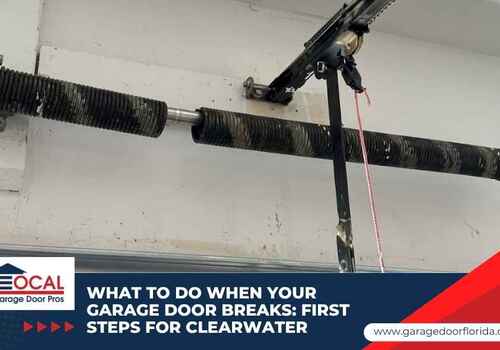
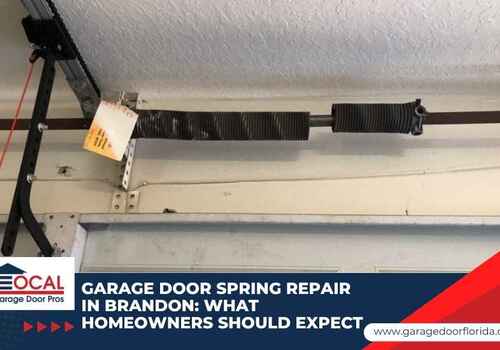
- Springs and Cables: Commercial torsion springs hold enough tension to cause serious injury, so frayed cables and spring gaps get flagged first.
- Tracks and Rollers: Bent track sections and flat-spotted rollers often explain grinding, jerking, or a door that drifts to one side.
- Curtain or Panels: Dented slats, cracked panels, and a worn bottom bar weaken security and let water and heat in at the seal.
- Operator and Safety Devices: The technician tests the motor, limit settings, photo eyes, and reversing edge, because a sensor fault can look a lot like a mechanical one.
Commercial door trouble often starts in one part and surfaces as a different problem somewhere else. That's why roll-up door troubleshooting keeps pointing back to the same few parts, and why one visit should cover the whole system.
Written Estimates and Spec-Matched Garage Door Parts
Once the technician finds the cause, the fix and its price go on paper before any work starts. That record matters for a business, especially when a part has to be ordered or the job grows once the door is opened up.
Parts are the other half of the conversation. We match replacement springs, cables, and rollers to the manufacturer's specs for that door's size and weight instead of grabbing whatever fits. An undersized spring on a heavy steel curtain wears out early and can throw the whole door out of balance.

Cycle Testing and the Commercial Garage Door Handoff
A commercial door repair isn't finished after one clean close. Before the crew packs up, the door goes through a short testing routine:
- Cycle the door fully open and closed several times on its normal operator.
- Check the balance with the operator disengaged, so the springs are doing the lifting.
- Confirm the photo eyes and reversing edge stop, and reverse the door when something's in the way.
- Reset the travel limits so the door seals at the floor and stops cleanly at the top.
Before leaving, the technician shows your site contact which parts changed and which ones will likely wear next. On a door that runs all day, that short handoff helps your staff spot trouble early.
How Tampa Weather Wears on Commercial Garage Doors
Tampa's biggest door stress comes from the weather calendar, since a large overhead door is often the biggest opening on a commercial building. A few local conditions wear on these doors more than most:
- Hurricane Season: Atlantic hurricane season runs from June 1 through November 30, and wind pressure often finds a weak point at the largest opening first.
- Wind-Load Ratings: Florida product approval rules (Florida Statutes section 553.842) cover exterior doors, and sectional and rolling garage doors appear in the Florida approval system, so you can look up a door's Florida product approval record.
- Summer Power Outages: Afternoon thunderstorms knock out power and leave staff working a door by its manual chain hoist or release.
- Humidity: Steady moisture in the air rusts exposed fasteners and spring coils over time.
That product approval assumes the door stays close to how it was tested, so mismatched struts, brackets, or panels added during a repair may leave a door that looks fine but no longer matches its rating. A hardware check before peak storm months makes more sense than waiting for a breakdown in August.
Checking a Garage Door Contractor's Credentials First
Florida licenses contractors through the Department of Business and Professional Regulation (DBPR). Before a crew starts on your property, ask for the license number and proof of insurance, then confirm the license through the DBPR license search or the Hillsborough County contractor license lookup.
A contractor who's happy to explain any line on the estimate is usually the one you want on a door that protects your inventory.
Keep Tampa Commercial Garage Doors Working Through Every Season
Once you know a commercial door service call moves from a full inspection to a written estimate, matched parts, and cycle testing, you can plan the downtime and ask better questions. In Tampa, that plan should also include a hardware check before hurricane season, not after the first storm.
Local Garage Door Pros is a family-owned company based in Tampa, providing 24/7 garage door service in Tampa for businesses and homes across the Tampa Bay area. If a loading dock, warehouse, or storefront door is acting up, call us today to get it inspected, priced in writing, and tested before we leave.

Frequently Asked Questions
Do you repair the operator as well as the door?
Yes. We repair commercial operators along with the door itself, including motors, circuit boards, limit settings, remote controls, and safety sensors. Since an operator problem can look a lot like a mechanical one, the technician tests both before recommending any repair or replacement part.
Can a commercial garage door be opened during a power outage?
Most commercial doors can be opened by hand during an outage through a manual chain hoist or a release on the operator. If the door feels much heavier than usual, stop and call for service, since that usually points to a spring or balance problem.
Will a repair affect my door's wind rating?
It can if the replacement parts don't match the door's tested setup. Florida product approvals cover a specific door configuration, so struts, brackets, and panels should match the original specs. Ask your technician which parts are rating-critical before any work begins on the door.
How often should a commercial garage door be serviced?
We recommend servicing a commercial garage door at least once a year, and more often if it cycles many times a day. In Tampa, scheduling a hardware check before hurricane season also helps catch rust, worn springs, and loose struts while repairs are still simple.
What should I do if a commercial door gets stuck open overnight?
Keep people clear of the opening and don't try to force the door down with the operator. Secure the area as well as you can, then call for service, since our team is available 24/7 for commercial doors that can't be closed or locked.