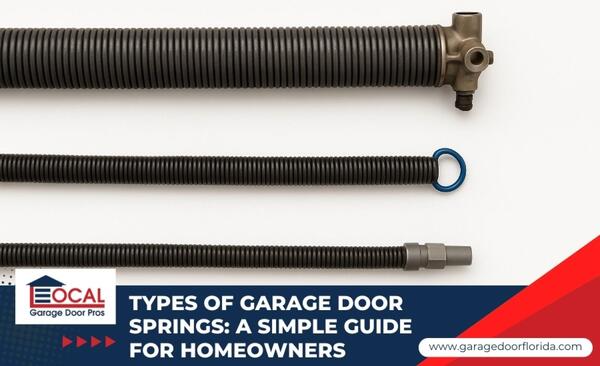
When it comes to garage door repair and maintenance, understanding the different types of garage door springs is key to keeping your system running smoothly. These springs support the lifting and lowering your door, making it easier and safer to operate. This guide will explain how each spring works, what makes them different, and how to choose the right option for your garage door.
- What Are Garage Door Springs?
- Main Types of Garage Door Springs
- Torsion Springs
- Extension Springs
- How to Choose the Right Garage Door Spring
- Why It's Important to Pick the Correct Spring Type
- When to Call a Professional Garage Door Repair
- Choosing the Right Spring Type for a Safe and Smooth Garage Door
- Frequently Asked Questions
- What are the main types of garage door springs?
- How do torsion garage door springs work?
- What is the purpose of extension garage door springs?
- Which is better, torsion springs or extension springs?
- How long do garage door springs typically last?

What Are Garage Door Springs?
Garage door springs are essential components that help balance the garage door's weight. Lifting the door manually or with an opener would require much more effort without these springs. The springs counteract the force of gravity, allowing the door to open and close easily and safely.
Garage door springs work by storing mechanical energy when the door is closed and releasing that energy as the door opens. They either twist or stretch depending on the spring type. Choosing the right spring ensures that your door operates smoothly and helps prevent damage to other system parts.
Improper or worn-out springs can lead to issues like a door that won't open fully, uneven movement, or safety hazards. That's why understanding the different spring types is essential for every homeowner.
Main Types of Garage Door Springs
Two primary types of garage door springs are used in residential doors: torsion springs and extension springs. Each has its design, function, and best-use scenarios.

Torsion Springs
Torsion springs play a key role in helping garage doors open and close smoothly by twisting to manage the door's weight. Installed on a shaft above the door, they are known for their strength and reliability. Here are some of the main features that make torsion springs a popular choice for many homeowners:
- Installed above the door, parallel to the header
- Provide balanced lifting force through torque
- Offer smoother, quieter operation compared to extension springs
- Typically last longer, often between 15,000 and 20,000 cycles
- Considered safer because they stay mounted securely even when they break
Torsion springs are ideal for heavier garage doors, including double-car and insulated ones. Their design allows for even weight distribution, reducing wear on the door system and offering consistent performance.
Extension Springs
Extension springs use stretching to help lift the garage door by counterbalancing its weight. Positioned along the sides of the door tracks, these springs are often chosen for simpler garage door systems. Below are the key characteristics that define extension springs and their typical applications:
- Stretch and release tension to assist in lifting the door
- Typically used for lighter or single-car garage doors
- Generally have a shorter lifespan, around 10,000 cycles
- Require safety cables to prevent injury if the spring breaks
Extension springs are more affordable but may not provide the same durability or balance as torsion springs. They are commonly found in older garage door systems or budget-friendly installations.
How to Choose the Right Garage Door Spring
Choosing the correct garage door spring depends on several factors, including the size and weight of your garage door, how often you use it, and your budget. Consider these factors when selecting a spring type:
- Door Size and Weight: For better support, heavier doors usually require torsion springs.
- Usage Frequency: High-cycle torsion springs are best for doors used multiple times daily.
- Budget: Extension springs are more affordable upfront, but may need replacement sooner.
- Safety Needs: Torsion springs are generally safer because they don't fly off if they break.
When in doubt, always consult a professional garage door technician who can assess your door and recommend the best option based on your needs.
Why It's Important to Pick the Correct Spring Type
Using the wrong type of garage door spring can lead to serious problems. An incorrect spring may not provide enough tension or could put too much strain on your door opener, leading to breakdowns or unsafe conditions. Problems caused by the wrong spring type:
- Poor balance, causing the door to sag or slam shut
- Increased wear on the opener and cables
- Higher risk of spring failure and safety hazards
Choosing the right spring helps ensure your door works properly, reduces repair costs, and improves safety for your family. If you're unsure which type you need, always seek professional guidance.
When to Call a Professional Garage Door Repair
While basic knowledge of garage door springs is helpful, handling repairs or replacements alone can be risky. Springs are tightly wound under high tension, and improper handling may lead to serious injury or damage. Consider calling a trained technician in these situations:
- The spring is visibly broken or has a gap in the coil
- The garage door is stuck, crooked, or not opening at all
- You hear loud snapping or popping sounds during operation
- The door feels unusually heavy or won't stay open properly
- You're unsure which spring type or size is needed
- Special tools or adjustments are required for the repair
A professional repair service can safely assess the issue, provide the right solution, and check for any other problems affecting the door's performance. This helps ensure safe operation and can prevent more costly repairs.
Choosing the Right Spring Type for a Safe and Smooth Garage Door
Choosing the right types of garage door springs significantly affects how well your door operates and how long it lasts. If you're unsure which spring your system needs or facing issues with worn-out parts, professional help is the safest option. For reliable garage door spring repair and expert service, trust Local Garage Door Pros to get the job done right.
Frequently Asked Questions
What are the main types of garage door springs?
The two main types of garage door springs are torsion springs and extension springs. Torsion springs are mounted above the door, while extension springs are on the sides.
How do torsion garage door springs work?
Torsion springs store energy by winding and unwinding as the garage door opens and closes. They provide controlled lifting power, making the door easier and safer.
What is the purpose of extension garage door springs?
Extension springs stretch and contract to counterbalance the weight of the garage door. They are typically installed along the sides of the door tracks in lighter garage door systems.
Which is better, torsion springs or extension springs?
Torsion springs are generally safer, longer-lasting, and provide smoother door operation than extension springs. Extension springs may be used for smaller or lighter doors.
How long do garage door springs typically last?
Garage door springs last 7 to 12 years or about 10,000 to 20,000 cycles. Lifespan depends on spring type, quality, usage frequency, and proper maintenance.
Recent Posts
-
Diagnosing a Garage Door That Jerks When Closing
Jul 26, 2026 -
Diagnosing a Garage Door That Bounces When Closing
Jul 26, 2026 -
Why is My Garage Door Making a Grinding Noise?
Jul 26, 2026