Overhead doors are a big part of how homes and businesses stay secure, safe, and easy to access. In this guide, we'll walk through the most common types of overhead doors, how each one works, and which types are best for residential or commercial use.
If you're a homeowner or business owner looking for a clear and practical way to choose the right one, this article will help you understand the different types of overhead doors and what each has to offer. Also, check out our tips on common garage door problems to avoid unexpected issues.
- What to Consider Before Choosing an Overhead Door
- 1. Sectional Overhead Doors
- 2. Roll-Up Overhead Doors
- 3. Tilt-Up Canopy Doors
- 4. Tilt-Up Retractable Doors
- 5. Side-Sliding Overhead Doors
- 6. High-Speed Overhead Doors
- 7. Fire-Rated Overhead Doors
- How to Choose the Right Overhead Door
- Find the Right Door Solution for Your Space Today
- Frequently Asked Questions
- What are the most common types of overhead doors?
- Which type of overhead door is best for homes?
- What is the difference between sectional and roll-up doors?
- Are high-speed overhead doors worth the cost?
- How do I choose the right overhead door for my property?

What to Consider Before Choosing an Overhead Door
Choosing the right overhead door isn't just about looks—it impacts safety, energy efficiency, ease of use, and long-term costs. The type of door you install should match the way you use your space, whether that's a family garage, a busy warehouse, or a secure storage area. Understanding the main door types helps you make a smart choice that fits your needs and your property.

1. Sectional Overhead Doors
Sectional overhead doors are valued for their reliable operation, energy efficiency, and space-saving design. Their flexibility makes them a smart option for many property types. Depending on the layout and use of your space, they are especially suitable for:
- Residential garages
- Small commercial buildings
- Workshops and storage units

2. Roll-Up Overhead Doors
Roll-up overhead doors are commonly found in commercial and industrial settings due to their durability and compact design. Unlike sectional doors, these models coil into a drum above the opening, making them ideal for spaces with limited ceiling room or heavy-duty usage. Built with narrow steel slats, they offer strong security, minimal maintenance, and long service life, especially in high-traffic environments. For these reasons, they're well-suited for:
- Warehouses
- Storage units
- Commercial buildings with high use
3. Tilt-Up Canopy Doors
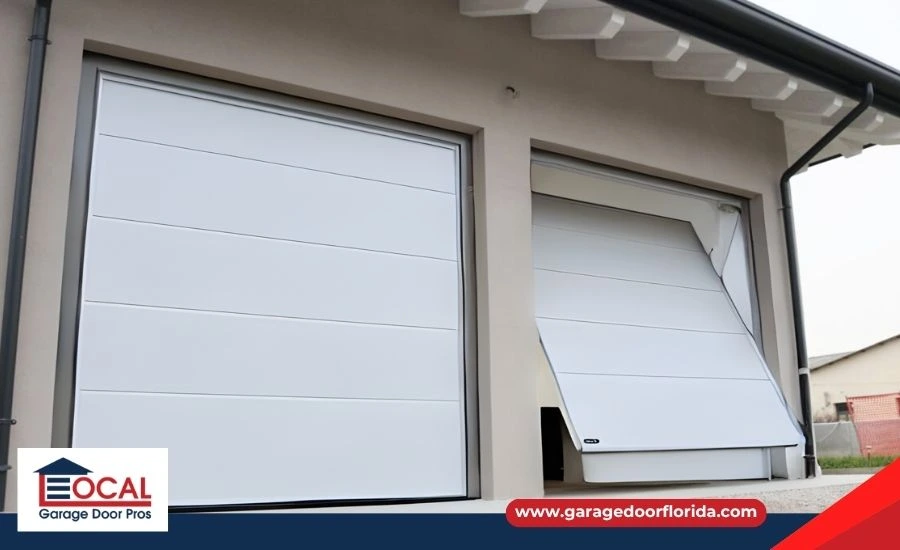
Tilt-up canopy doors consist of a single solid panel that tilts outward and upward before resting parallel to the garage ceiling. Their simple design makes them easy to operate and appealing for certain architectural styles. However, they require more clearance in front of the garage, which can be a limitation in tight spaces. Their clean appearance and straightforward function make them a good match for:
- Older homes
- Areas where appearance matters
- Spaces with enough front clearance

4. Tilt-Up Retractable Doors
Tilt-up retractable doors also use a single solid panel, but unlike the canopy style, they retract fully into the garage without swinging out. This makes them a safer and more space-efficient option for driveways with limited front clearance. However, they use more complex hardware and take up additional ceiling space inside the garage. These features make them an ideal choice for:
- Custom residential garages
- Homeowners looking for a sleek design
- Spaces with enough ceiling height for retraction hardware.

5. Side-Sliding Overhead Doors
Side-sliding overhead doors operate by moving horizontally along tracks at the top and bottom of the opening, sliding to one side instead of lifting overhead. This makes them ideal for garages with low ceilings or areas where overhead space is limited. They also allow partial opening, which is useful for foot traffic or quick access. Because of their unique operation and layout flexibility, they're a good fit for:
- Garages with low or no ceiling clearance
- Side access or foot traffic
- Custom garage spaces

6. High-Speed Overhead Doors
High-speed overhead doors are built for environments where fast, frequent access is essential. They open and close much faster than standard doors, helping to control temperature, improve workflow, and reduce energy loss. These doors are made from strong but lightweight materials. They're ideal in places with lots of people, equipment, or vehicle movement. Their performance advantages make them especially useful in:
- Industrial facilities
- Temperature-controlled storage
- Areas needing fast access

7. Fire-Rated Overhead Doors
Fire-rated overhead doors are designed to help contain flames and smoke in the event of a fire. They resemble roll-up doors but are built with special fire-resistant materials and automatic closing systems triggered by heat or alarm sensors. These doors meet strict building codes and provide an added layer of protection in high-risk environments. They are most often required in:
- Warehouses and factories
- Buildings with fire safety codes
- Indoor wall openings between fire zones
How to Choose the Right Overhead Door
Choosing the right overhead door depends on your space, usage, and specific needs. Before making a decision, consider a few key questions:
- Is it for a home or business?
- Do you need insulation or fire safety?
- How much space do you have above and around the door?
- Will the door be used often or only once in a while?
These questions can help narrow your choices. They also help you find a door that works well, saves energy, and lasts a long time. When in doubt, a professional can help guide you toward the most suitable solution.
Find the Right Door Solution for Your Space Today
Understanding the different types of overhead doors is key to choosing the right fit for your home or business. From insulation to clearance needs, each option serves a unique purpose. If you need help with selection or commercial garage door repair, contact Local Garage Door Pros for expert guidance tailored to your space and budget.
Frequently Asked Questions
What are the most common types of overhead doors?
The most common types of overhead doors include sectional, roll-up, tilt-up, side-sliding, high-speed, and fire-rated models.
Which type of overhead door is best for homes?
Sectional doors are best for homes due to their compact design, insulation features, and smooth operation.
What is the difference between sectional and roll-up doors?
Sectional doors fold on tracks, while roll-up doors coil into a drum. Roll-up doors save space and are ideal for commercial use.
Are high-speed overhead doors worth the cost?
Yes, they are ideal for high-traffic, climate-sensitive environments like cold storage or clean rooms.
How do I choose the right overhead door for my property?
Consider your space, usage, safety needs, and insulation preferences. A professional can help match the right door to your needs.
Recent Posts
-

Diagnosing a Garage Door That Jerks When Closing
Jul 26, 2026 -
Diagnosing a Garage Door That Bounces When Closing
Jul 26, 2026 -
Why is My Garage Door Making a Grinding Noise?
Jul 26, 2026