Is your garage door groaning or shaking? These are signs of an unbalanced door, a condition that leads to costly damage and safety risks.
A properly balanced door relies on its springs to carry the weight, allowing the opener to work efficiently. This guide explains how to balance a garage door with a simple, step-by-step test so you can check its condition and keep the system running safely.
- What is a Balanced Garage Door, and Why is it Critical?
- Signs of an Unbalanced Garage Door
- The 3-Step Garage Door Balance Test: An Important Safety Check
- IMPORTANT SAFETY FIRST: Before You Touch Anything
- Understanding the Results: What to Do Next
- First, What is Your Spring System?
- For Doors with Torsion Springs: STOP. This is a Job for a Certified Professional.
- A Cautious DIY Guide on how to adjust garage door Extension Springs
- A Balanced Door is a Safe and Healthy Door
- Frequently Asked Questions
- How often should I test my garage door balance?
- Can my garage door opener lift an unbalanced door?
- Is a noisy garage door always a sign of an unbalanced door?
- What's the main difference between adjusting torsion and extension springs?
- What is included in a professional garage door tune-up?

What is a Balanced Garage Door, and Why is it Critical?
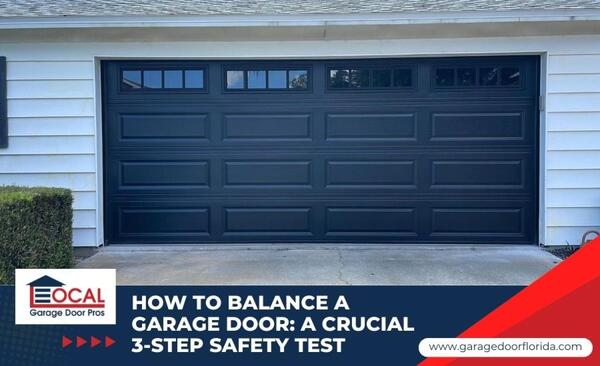
A balanced garage door has its weight perfectly offset by the spring system, allowing it to feel light and stay put when opened halfway.
This balance is critical because it prevents the garage door opener from lifting dead weight, a task that quickly destroys its motor and gears while creating a significant safety hazard.
Signs of an Unbalanced Garage Door
Before performing a test, your garage door may be showing clear symptoms of an imbalance. Recognizing these signs can help you catch the problem before it worsens into a major system failure.
- Unusual Noises: Grinding, scraping, or banging sounds are clear signs of excessive strain on the system. These noises mean the opener is struggling against the door's dead weight instead of guiding a balanced load. We saw this firsthand on a recent project where a homeowner's opener was making a terrible grinding sound; the root cause was a severely unbalanced door caused by a worn-out spring.
- Difficult Manual Operation: After disengaging the opener, the door should be easy to lift with one hand. If it feels very heavy, the springs have lost tension and are no longer providing the necessary lift assistance.
- Uneven Movement: A door that opens at a slant or moves in a jerky, unsteady manner often points to a problem with one of the springs. This uneven force can damage the door’s tracks and rollers over time, leading to a garage door off track.
- Fails to Open or Close Fully: An opener may stop or reverse if it detects too much resistance from an unbalanced door. The system's safety mechanism interprets this heavyweight as a blockage.
- Visible Spring Damage: A quick visual inspection can reveal the problem immediately. A broken torsion spring will have a clear gap in its coils, while worn extension springs will look stretched out and saggy.
Now that you can recognize the warning signs, the next step is to confirm the diagnosis. Fortunately, you can determine the health of your spring system with a simple and clear test.
The 3-Step Garage Door Balance Test: An Important Safety Check
The balance test involves disengaging the opener with the door closed, manually lifting the door halfway, and letting go to see if it stays in place.
Performing this check correctly is the most effective way to check your system, but following safety protocols is essential to prevent accidents.
IMPORTANT SAFETY FIRST: Before You Touch Anything
Before you begin, perform a visual inspection of your springs, cables, and rollers. If you see anything that looks broken, frayed, or rusted, STOP.
A damaged component means the system is already damaged and needs immediate professional attention. The single most important rule is to only disengage the opener when the door is in the FULLY CLOSED position.
If you pull the emergency release cord while the door is open, especially if a spring is broken, the full weight of the door could come crashing down, causing severe injury or damage.
- Step 1: Disengage the Garage Door Opener: With the door fully closed, firmly pull the red emergency release cord hanging from the opener trolley. You should hear a distinct click as the door disengages from the opener drive, putting it in manual mode.
- Step 2: Manually Lift the Door: Using the handle, lift the door until it is about halfway open, which is typically around waist or shoulder height. It should move smoothly along its tracks without requiring too much force.
- Step 3: Gently Let Go and Observe: Carefully. Release the door and watch what it does. Its reaction provides a clear diagnosis of your spring system's condition.
- A Perfectly Balanced Door: The door will stay put, "floating" in place. A tiny drift of an inch or two is acceptable.
- An Unbalanced Door (Heavy): If the door drifts down or slams shut, the springs are weak and no longer have enough tension to hold the door's weight.
- An Unbalanced Door (Light): If the door shoots upward, the springs have too much tension and are overpowering the door's weight.
The result of this test tells you everything you need to know. Your next actions, however, depend entirely on what kind of spring system you have.

Understanding the Results: What to Do Next
Your next steps are determined by the test results and your spring type.
Torsion springs always require a professional, while extension springs can sometimes be adjusted by a knowledgeable homeowner who follows strict safety procedures.
First, What is Your Spring System?
You must correctly identify your spring type before considering any adjustments.
- Torsion Springs: These are large, powerful springs mounted on a metal bar directly above the door opening.
- Extension Springs: These are longer, thinner springs that run parallel to the horizontal tracks on each side of the door.
For Doors with Torsion Springs: STOP. This is a Job for a Certified Professional.
There is no safe DIY solution for adjusting torsion springs. These springs hold an immense amount of rotational energy, and an uncontrolled release can be violent and even lethal.
Attempting this repair without the correct training and specialized winding bars is extremely dangerous, so for any garage door repair involving these parts, you must call a professional immediately.
A Cautious DIY Guide on how to adjust garage door Extension Springs
Adjusting extension springs is less dangerous but still requires great care. Before you begin, confirm that safety cables are running through the center of each spring; if not, call a professional to have them installed.
On a recent service call, we helped a customer whose door was slightly heavy; a simple one-hole adjustment on the extension spring bracket, as described below, was all it took to restore perfect balance.
- Tools Needed: A sturdy ladder, two C-clamps or locking pliers, and an adjustable wrench.
- Open the Door FULLY. Lift the door to its highest position to release all tension from the springs, making them safe to handle.
- Secure the Door. Place a C-clamp tightly on both vertical tracks just below the bottom roller. This is a critical step that prevents the door from falling while you work.
- Adjust the Tension. Locate the bracket that connects the spring to the track hanger, which has a series of holes for adjustment. To increase tension (if the door was heavy), move the S-hook to a lower hole. To decrease tension (if the door shot up), move the S-hook to a higher hole.
- Adjust Both Sides Equally. Make the exact same one-hole adjustment on both sides to ensure the door lifts evenly.
- Retest the Door. Remove the C-clamps and perform the balance test again. Repeat with small adjustments until the door is balanced.
If your springs are old, rusted, or have visible gaps between the coils, adjustments are only a temporary fix. In these cases, the springs need attention and should be replaced by a professional to ensure safe, long-term operation.

A Balanced Door is a Safe and Healthy Door
The balance of your garage door is the foundation of a safe, reliable, and long-lasting system. An unbalanced door is not a minor inconvenience—it can wear out expensive parts and create serious safety hazards.
With the steps in this guide, you can test your door’s balance and understand the results. For doors with extension springs, minor adjustments may be possible if every safety step is followed.
However, if you’re dealing with torsion springs or feel unsure at any point, the safest choice is to call Local Garage Door Pros for expert garage door repair in Clearwater and professional service you can trust.
Frequently Asked Questions
How often should I test my garage door balance?
You should perform the balance test seasonally, or about every two to three months, as part of a routine maintenance check. It is also recommended to have a professional technician service and inspect your entire system at least once a year.
Can my garage door opener lift an unbalanced door?
An opener will try to lift an unbalanced door, but doing so is the primary cause of its premature failure. Openers are designed to manage a light, balanced load of 5-10 lbs, not dead-lift hundreds of pounds.
Is a noisy garage door always a sign of an unbalanced door?
While an unbalanced door is a common cause of unusual noises, the sounds could also be from worn-out rollers or parts that need lubrication. However, because noise is a primary indicator of strain, you should always perform a balance test to rule out a spring issue.
What's the main difference between adjusting torsion and extension springs?
The key difference is safety and the tools required. Torsion springs store powerful rotational energy and require special winding bars and training to adjust safely. Extension springs stretch along the track and can be adjusted with common tools by moving a hook, making it a more accessible task for a cautious homeowner.
What is included in a professional garage door tune-up?
A professional tune-up is a full service that includes balancing the door and much more. A technician will also lubricate all moving parts, tighten hardware, and perform a full safety inspection of all parts to ensure the entire system operates correctly.
Recent Posts
-

Diagnosing a Garage Door That Jerks When Closing
Jul 26, 2026 -
Diagnosing a Garage Door That Bounces When Closing
Jul 26, 2026 -
Why is My Garage Door Making a Grinding Noise?
Jul 26, 2026