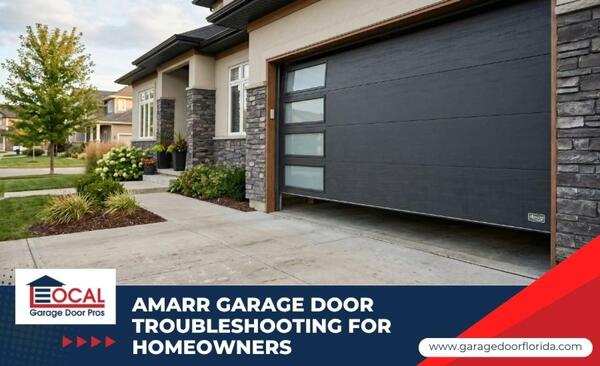
Amarr garage door troubleshooting starts with checking the power source, inspecting the safety sensors, testing the remote, and lubricating the right moving parts. Fixing common garage door issues early helps protect your home, keep the door safe to use, and prevent expensive mechanical failures.
When your Amarr garage door stops working properly, a quick check can help you spot simple problems before they turn into major repairs. This guide explains what homeowners can safely fix, what warning signs to watch for, and when to call a professional garage door technician.
- What Maintenance Checks Should Homeowners Start With
- Building Codes and Wind Load Requirements
- Quick Diagnostic Symptom Checker
- Why Will My Amarr Garage Door Not Close
- How Do You Align and Clean Photo Eyes
- What Causes Grinding Noises on the Garage Track
- Where Should You Apply Garage Door Lubricant
- Why Will the Remote Control Not Open the Door
- Which Garage Door Problems Are Dangerous
- Why Are Broken Torsion Springs and Lifting Cables Unsafe?
- Get Safe Amarr Garage Door Repair
- Frequently Asked Questions
- What is the penalty for noncompliance with wind load codes?
- Why does my door reverse before hitting the ground?
- Can I use basic oil on the tracks?
- How long do garage door lifting springs usually last?
- What causes the wall switch to blink repeatedly?
What Maintenance Checks Should Homeowners Start With
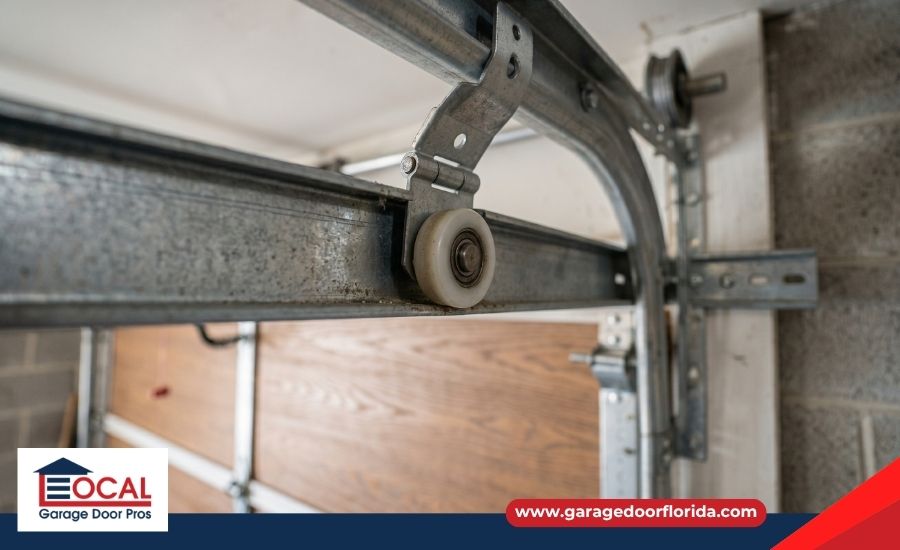
Start with a visual check of the rollers, hinges, springs, cables, tracks, and opener before adjusting or touching any moving parts. A safe diagnostic process protects your garage door system and helps extend the lifespan of expensive overhead lifting parts.
Look for rust, loose hardware, worn rollers, frayed cables, bent tracks, or unusual gaps in the spring system. If you hear minor squeaks, apply the right garage door lubricant rather than ignore the sound until a part breaks.
Homeowners should also inspect their garage doors before hurricane season because worn rollers, weak hinges, and damaged reinforcement parts can reduce storm protection.
Building Codes and Wind Load Requirements
Building codes help ensure your home can withstand severe storms safely. While standard garage doors provide basic structural support, many homes need certified wind-rated doors, reinforced hardware, or hurricane-rated upgrades to stay compliant.
Wind load means the amount of wind pressure a garage door can handle without bending, buckling, or failing. This matters because the garage door is one of the largest openings in your home.
National safety standards often focus on basic anti-crush features, such as optical safety sensors. Storm-prone regions may require stronger bracing, reinforced panels, heavy-duty struts, and properly rated hardware.
Quick Diagnostic Symptom Checker
Use this quick reference guide to identify potential issues with your garage door and determine whether it is safe to troubleshoot on your own. This chart helps you spot simple issues before they turn into serious hardware problems.
| Symptom | Likely Cause | DIY Safe |
| The door will not close completely | Blocked or misaligned safety sensors | Yes |
| Loud squeaking or grinding | Dry hinges, rollers, or tension springs | Yes |
| The wall switch works, but the remote fails | Dead batteries or engaged vacation lock | Yes |
| The door hangs crooked in the track | Snapped steel lifting cable | No, call a pro |
| Visible gap in the overhead coil | Broken tension spring | No, call a pro |
Why Will My Amarr Garage Door Not Close
The most common reason an Amarr garage door refuses to close is a problem with the safety sensors. These sensors sit near the floor and send an invisible beam across the track to prevent the door from closing on a person, pet, or object.
Under federal safety standards, these safety sensors tell the motor to reverse automatically if something breaks the beam. You can usually troubleshoot an Amarr garage door sensor issue in a few minutes with basic household items.
How Do You Align and Clean Photo Eyes
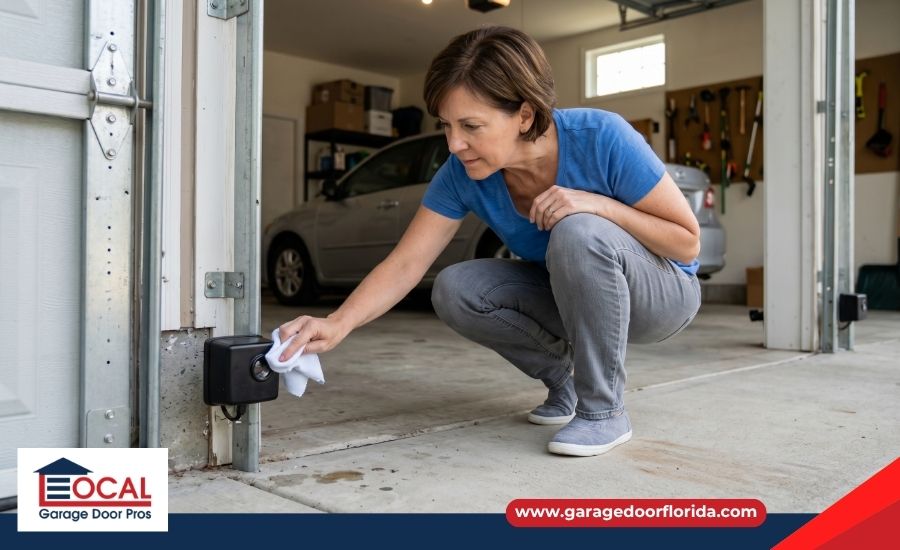
Cleaning and aligning the photo eyes restores the safety beam and allows the door to close properly. This simple maintenance step prevents false obstruction readings and keeps your system working smoothly.
- Clear the path by moving trash cans, yard tools, boxes, or debris away from the vertical tracks.
- Gently wipe both sensor lenses with a clean, dry microfiber cloth to remove dust, dirt, and cobwebs.
- Loosen the wingnut on the sensor with a flickering or dark LED indicator light.
- Move the sensor slowly by hand until the indicator light shines bright and steady.
- Tighten the nut securely once the sensor stays in the correct position.
What Causes Grinding Noises on the Garage Track
Squeaking and grinding sounds usually mean your door lacks proper lubrication. Humidity, coastal salt air, and regular use can dry out factory grease and create metal friction.
Once the door closes correctly, listen to how it moves, as unusual noise often indicates friction. Regular maintenance keeps your track components running smoothly and prevents the motor unit from overworking.
Where Should You Apply Garage Door Lubricant
Apply lubricant directly to metal friction points to reduce grinding noises. Targeting the correct parts helps the rollers move smoothly without causing dirt buildup inside the tracks.
- Avoid basic penetrating oils because they can strip away existing grease and attract dirt.
- Choose a silicone spray or white lithium grease designed for overhead doors.
- Lightly spray the metal hinges, roller bearings, and torsion spring above the door.
- Avoid spraying the inside of the vertical tracks directly because the rollers should spin, not slide.
Why Will the Remote Control Not Open the Door
A remote that stops working usually points to dead batteries, signal trouble, or an engaged vacation lock. Sometimes the garage door hardware works properly, but the electronic control system fails to communicate with the opener.
If your wall console opens the door but your remote does not, you likely have a simple power or setting issue. Check the vacation lock on your indoor wall control panel first.
If the lock button is activated, the garage door opener ignores outside radio signals. Replace the remote batteries, check for a blocked antenna, and unplug the main opener from the ceiling outlet for one minute to reset the internal computer.
Which Garage Door Problems Are Dangerous
Broken springs, snapped cables, crooked doors, and damaged tracks are dangerous because they involve high-tension parts. These repairs require professional tools, proper training, and safe handling.
Some problems are simple, but others can cause serious injury if handled the wrong way. Your overhead door is one of the heaviest moving parts in your home, so never force it open or closed when it looks uneven, jammed, or unstable.
Why Are Broken Torsion Springs and Lifting Cables Unsafe?
Broken torsion springs and lifting cables are unsafe because they hold and control the full weight of the garage door. Attempting to repair these parts yourself can cause severe injury.
Look directly above the closed door to find the torsion springs. These large steel coils store significant tension, helping the door lift and lower smoothly.
If you see a visible gap in the metal coil, the spring is broken. Also watch for snapped lifting cables running down the sides of the door. If either part fails, stop using the door and call a trained garage door technician.
Get Safe Amarr Garage Door Repair
Local Garage Door Pros can inspect your Amarr garage door, find the cause of the problem, and complete the right repair safely. Skip dangerous repairs on high-tension parts and let trained technicians handle broken springs, snapped cables, opener problems, damaged tracks, and storm-related garage door issues.
Local Garage Door Pros is a full-service garage door company serving the Clearwater, FL area, specializing in comprehensive garage door repair, new garage door installation, and emergency garage door repair for local homeowners and businesses.
Frequently Asked Questions
What is the penalty for noncompliance with wind load codes?
Noncompliance may lead to failed inspections, repair delays, code violations, or insurance issues after storm damage.
Why does my door reverse before hitting the ground?
The sensors may see an obstruction or be misaligned. Clean the lenses and adjust them until the light stays steady.
Can I use basic oil on the tracks?
Avoid basic oils because they attract dirt and sticky buildup. Use silicone spray or white lithium grease on moving parts.
How long do garage door lifting springs usually last?
Most torsion springs last about 10,000 cycles, but rust, humidity, and heavy use can shorten their working life.
What causes the wall switch to blink repeatedly?
A blinking wall switch often means vacation lock mode is active. Hold the lock button to restore normal operation.
Recent Posts
-
Diagnosing a Garage Door That Jerks When Closing
Jul 26, 2026 -
Diagnosing a Garage Door That Bounces When Closing
Jul 26, 2026 -
Why is My Garage Door Making a Grinding Noise?
Jul 26, 2026