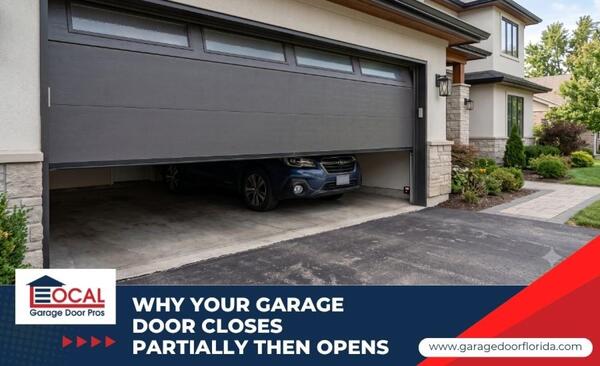
It is frustrating when your garage door closes partially, then opens right back up. This common problem often occurs when built-in safety features near the garage door opener detect an obstruction, misalignment, or excessive resistance.
Finding the root cause helps you fix the issue faster and avoid bigger damage. Below are the most common reasons your garage door reverses before it reaches the floor.
- Why Does the Garage Door Reverse Suddenly?
- Common Reasons Your Garage Door Reverses
- How Do Safety Sensors Affect Door Movement?
- How Does Track Friction Cause a Reversal?
- What Happens When Debris Blocks the Threshold?
- When Is It Time to Call a Professional?
- Resolve Your Garage Door Issues Today
- Frequently Asked Questions
- Is an Automatic Reversal System Legally Required?
- What Causes the Safety Sensor Lights to Blink?
- How Often Should I Lubricate the Moving Parts?
- Can I Adjust the Closing Force Myself?
- Why Does the Motor Click but the Door Stays Open?
Why Does the Garage Door Reverse Suddenly?
Your system reverses because federal safety guidelines require garage door openers to include entrapment protection. These safety features help stop the door from closing on a person, pet, vehicle, or object.
The opener may reverse when the infrared sensors detect a blockage. It may also reverse when the motor senses heavy drag from worn rollers, dirty tracks, or a door that is not moving smoothly.
Understanding these safety limits makes the problem easier to diagnose. In many cases, you can start with simple checks before calling for professional service.
Common Reasons Your Garage Door Reverses
Several issues can cause your garage door to reverse before it fully closes. Use this table to spot the most likely problem, then check the simple items first before calling for repair.
| Possible Cause | What It Means | What to Check First |
| Misaligned safety sensors | The opener thinks something is blocking the door. | Clean the lenses and check if both sensor lights stay solid. |
| Dirty or dry rollers | The door creates too much resistance while closing. | Lubricate approved moving parts with silicone-based spray. |
| Debris near the threshold | The bottom seal hits leaves, dirt, tools, or toys. | Sweep the floor and clear the full door path. |
| Track friction | Dirt, rust, or buildup makes the door harder to move. | Wipe the tracks and check for bent or blocked areas. |
| Broken spring or cable issue | The opener cannot safely carry the door's weight. | Stop using the door and call a trained technician. |
How Do Safety Sensors Affect Door Movement?
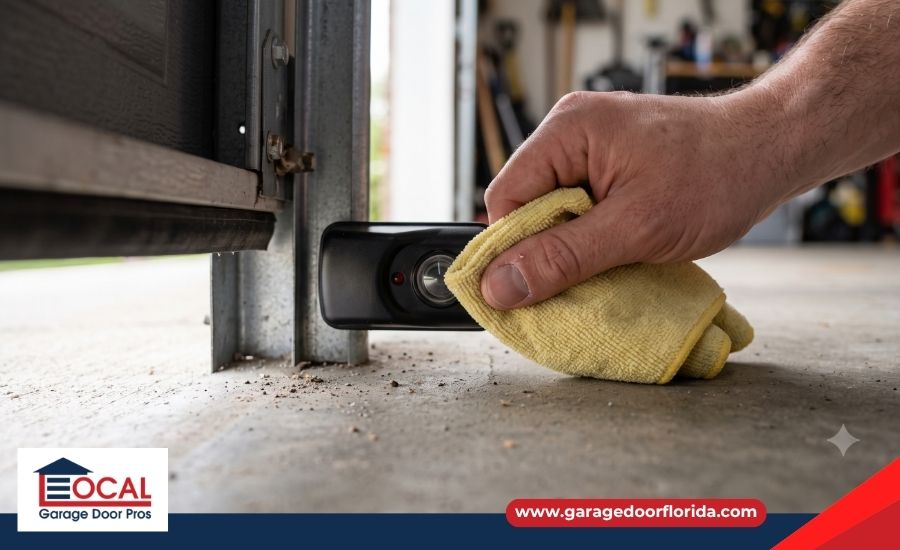
Photo eye sensors send an invisible infrared beam across the base of the garage door opening. If anything blocks that beam, the opener stops the door and sends it back up.
Dirty lenses, loose brackets, poor alignment, and direct sunlight can all cause false sensor readings. A small object near the floor can also break the beam and trigger the reversal.
Start by wiping both sensor lenses with a soft, dry cloth. Then check that both units face each other and that the indicator lights stay solid. If bright morning sunlight hits one sensor directly, a small cardboard shield may help reduce glare.
How Does Track Friction Cause a Reversal?
Track friction can also make your garage door close partially, then open again. When rollers drag against dirty tracks or dry hinges, the opener may read the resistance as an obstruction.
Florida humidity and salt air can make this problem worse over time. Moisture can lead to rust, grime, and stiff moving parts, especially on older garage doors.
Apply a silicone-based spray lubricant to the hinges, rollers, and other approved moving parts. Avoid heavy grease, as it can trap dirt and make parts harder to move.
Wipe the inside of the metal tracks with a damp rag to remove stuck dirt and debris. Clean tracks help wind-rated garage doors move smoothly, especially in Florida homes where humidity, storms, and local code requirements can place more stress on the system.
Regular maintenance helps reduce unexpected reversals. It also helps protect the opener from working harder than it should.
What Happens When Debris Blocks the Threshold?
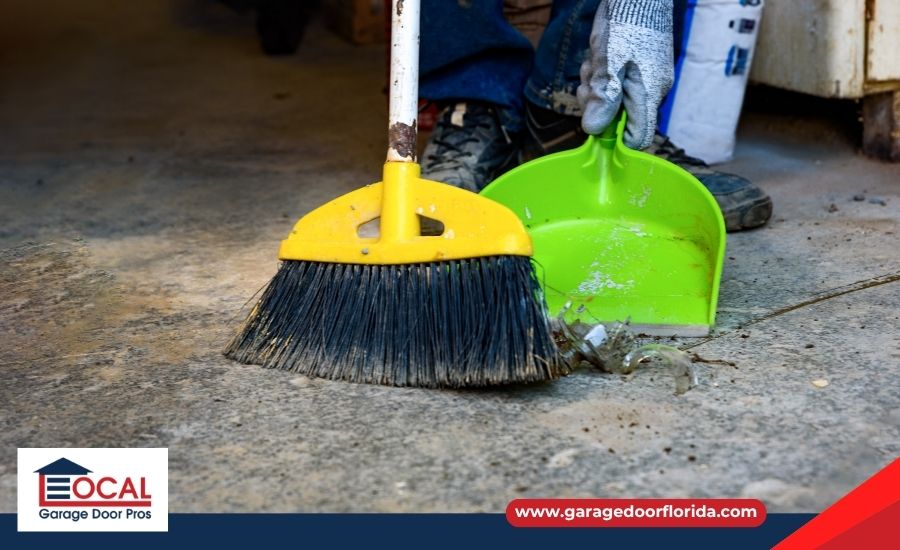
Storms can blow leaves, dirt, sticks, and small objects into the opening of the garage door. When the bottom seal hits this debris, the opener may think the door has struck an obstruction.
Sweep the concrete floor after heavy rain or wind. Clear away tools, toys, storage bins, and anything else that may have shifted near the sensor path or threshold.
A clean floor helps the weather stripping seal tightly against the concrete. It also reduces false safety triggers that can stop the door from closing.
When Is It Time to Call a Professional?
Some garage door problems are dangerous and should not be handled without training. Heavy garage door components can cause serious injury when they fail or release tension.
Call a local technician if you notice any of these warning signs:
- Broken torsion springs made a loud bang overhead.
- Snapped lifting cables hanging loose near the drums.
- A door that feels unusually heavy when lifted manually.
- An opener motor that runs but cannot move the door.
- A logic board that ignores remote or wall control signals.
Torsion springs store a large amount of tension. If a spring breaks or gets adjusted the wrong way, it can release that tension violently.
Leave spring, cable, and force-setting repairs to trained technicians. A professional can inspect the full system and make the repair safely.
Resolve Your Garage Door Issues Today
A garage door that closes partially then opens usually points to a sensor issue, track friction, debris near the threshold, or a safety setting problem. Start with simple checks, but avoid spring, cable, and force-setting repairs if you are not trained.
Local Garage Door Pros is a full-service garage door company serving the Tampa, FL area, specializing in residential and commercial garage door repair, spring replacement, and emergency installation services for local property owners. Schedule a diagnostic appointment today if your system continues to reverse unexpectedly.
Frequently Asked Questions
Is an Automatic Reversal System Legally Required?
Yes. Modern openers need safety reversal protection. If your system lacks working sensors, stop using it and schedule service.
What Causes the Safety Sensor Lights to Blink?
Blinking sensor lights usually mean the beam is blocked or misaligned. Clean both lenses and adjust them until the lights stay solid.
How Often Should I Lubricate the Moving Parts?
Lubricate hinges, rollers, and approved moving parts twice a year. Homes near salt air or heavy humidity may need service sooner.
Can I Adjust the Closing Force Myself?
Only adjust the closing force if the manual says how. If the door fails a reversal test, stop using it and call a trained technician.
Why Does the Motor Click but the Door Stays Open?
A clicking motor with flashing lights often points to a sensor fault. Check for hidden blockages and make sure both lights stay steady.
Recent Posts
-

Diagnosing a Garage Door That Jerks When Closing
Jul 26, 2026 -
Diagnosing a Garage Door That Bounces When Closing
Jul 26, 2026 -
Why is My Garage Door Making a Grinding Noise?
Jul 26, 2026