A broken bay door at a warehouse doesn't wait for a convenient time. Neither does a jammed rolling steel curtain at a storage facility on a Friday afternoon. For business owners, a stuck or damaged commercial door usually means lost hours, blocked deliveries, or a security gap that can't sit open overnight.
If you've never had to call a commercial garage door company before, it helps to know what the visit will actually look like. We handle commercial garage door repairs for warehouses and businesses across Clearwater, and the process is more structured than most business owners expect.
- Commercial Doors Aren't Just Bigger Residential Doors
- The Call and the First Look
- Parts, Repairs, and a Straight Answer on Cost
- Testing, Calibration, and the Walkthrough
- Why Clearwater Buildings Wear Differently
- What This Means for Your Invoice
- Frequently Asked Questions
- What types of commercial garage doors do you repair?
- Will I get a written estimate before any repair work begins?
- Is your team licensed and insured for commercial job sites?
- What happens after the repair is finished?
- How can I reduce wear on a commercial door between service calls?
Commercial Doors Aren't Just Bigger Residential Doors
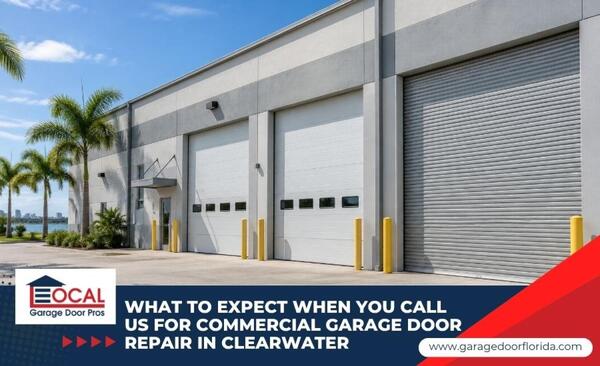
A sectional overhead door on a warehouse and a two-car garage door share some parts, but the similarities mostly stop there. Commercial buildings often run rolling steel curtains, fire-rated doors, or high-speed doors built for constant daily cycles rather than a few trips a day. The springs carry more tension, the operators are rated for heavier use, and a failure usually affects a whole operation instead of one household.
That's part of why we treat a commercial call differently from the start. A technician showing up to a business needs to know the door type, the daily cycle count, and whether the building has any specific safety or access requirements before touching anything.
The Call and the First Look
When you reach out, we start with a few direct questions: what the door is doing, when the problem started, and whether it's affecting access or security right now. That gives the technician a starting point before they ever step onto the property.
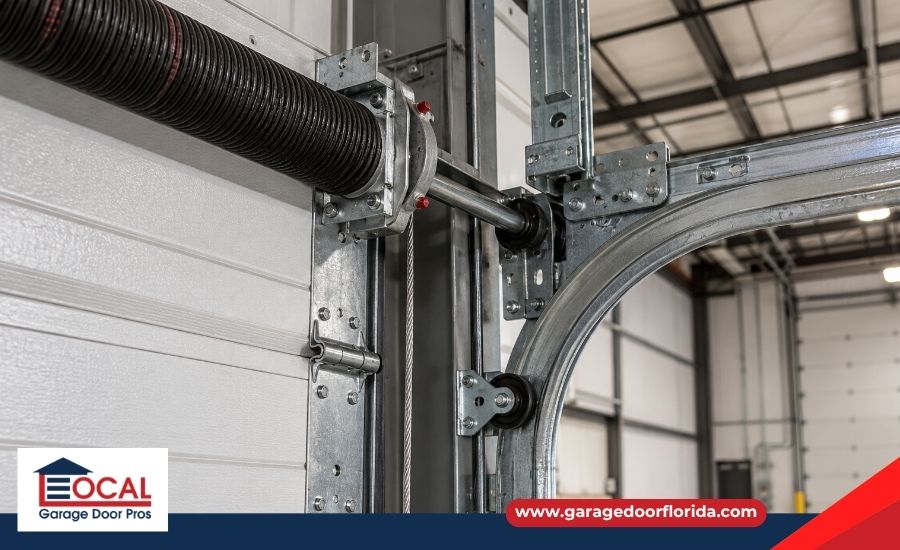
Once on site, the inspection covers more than the symptom you called about. Tracks, rollers, cables, springs, hinges, and the opener all work as one system, so a problem in one part often shows up as a symptom somewhere else. We'd rather catch a second issue during this visit than have you call back next month for something we could have flagged the first time.
Parts, Repairs, and a Straight Answer on Cost
After the inspection, you should get a plain explanation of what's wrong and what it will take to fix it, in writing, before any repair work starts. That's standard practice for any commercial contractor worth hiring, and it protects you if a job runs into a part that needs ordering or turns out bigger than expected.
We source replacement parts that meet manufacturer specifications rather than whatever is cheapest on the shelf. A mismatched spring or an off-spec cable on a commercial door is a safety problem waiting to happen, not just a shortcut.
Testing, Calibration, and the Walkthrough
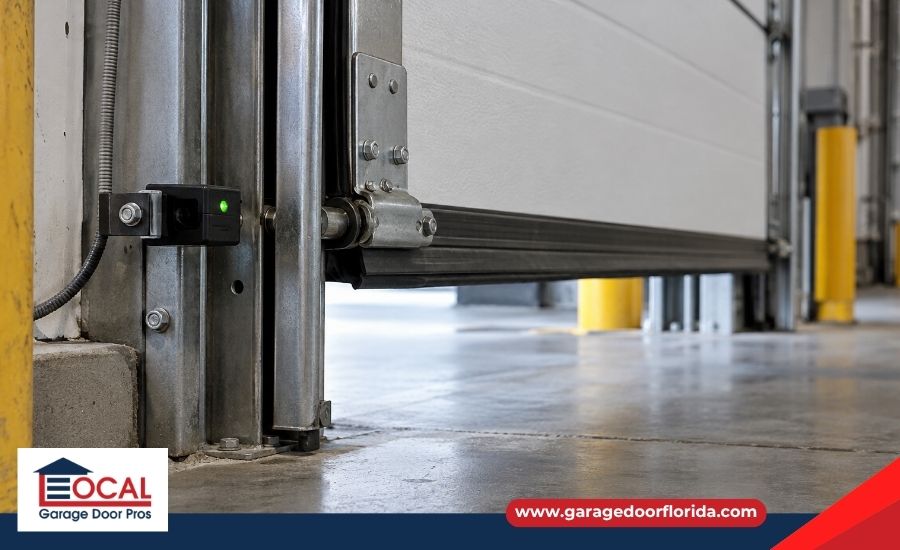
A repair isn't finished when the door closes once. Before we consider a job done, we run the door through multiple open-and-close cycles, check the balance, and confirm the safety reversal sensors are working the way they're supposed to. Commercial doors get used dozens of times a day, so a fix that only works on the test run isn't a fix.
Before we leave, we walk the site contact through what was done, what to watch for, and any maintenance that would help avoid a repeat visit. That last part matters more here than almost anywhere else in Florida.
Why Clearwater Buildings Wear Differently
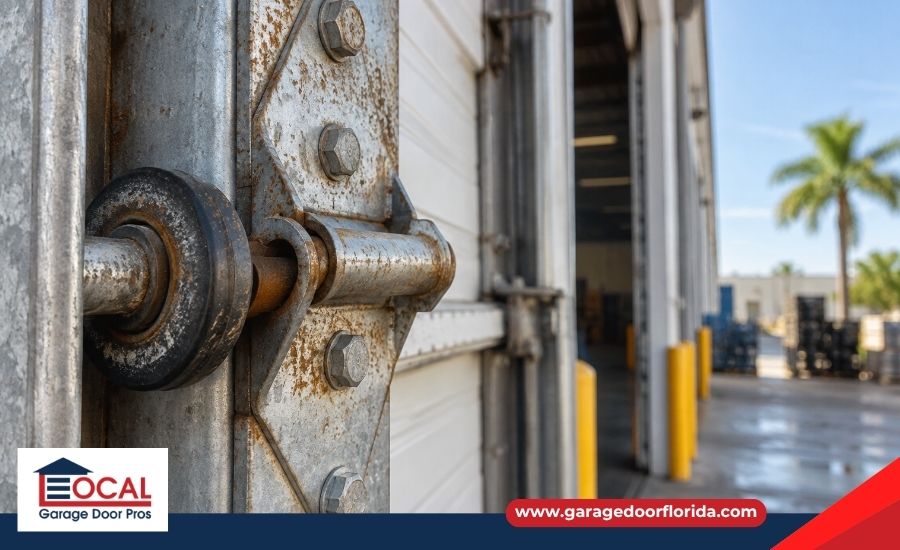
Being close to the Gulf comes with a tradeoff most business owners don't think about until a door starts acting up. Humid, salt-heavy air near the coast speeds up corrosion on exposed metal hardware. Tracks, hinges, and springs on a building near the water tend to show wear faster than the same parts would forty miles inland. It's not a reason to panic, but it is a reason to get hardware checked on a schedule instead of waiting for a full breakdown.
What This Means for Your Invoice
Every business we work with should walk away from a service call knowing exactly what they paid for and why. Ask for proof of insurance before a crew starts work on your property, not after, and don't hesitate to ask a technician to explain a line item on the estimate. You can also verify a Florida contractor's license yourself before any work begins, which takes less time than most people expect.
We're licensed, bonded, and insured to work on commercial properties across the Tampa Bay area, and we'd rather answer a question about our credentials than have a business owner find out the hard way that a contractor wasn't covered.
Local Garage Door Pros services commercial and industrial properties throughout the Tampa Bay area, including Clearwater, and we handle everything from the coastal wear-and-tear issue covered above to full opener replacements on rolling steel and sectional doors. If a commercial door at your property is acting up, our team can take a look and tell you exactly what's going on before any work begins.
Frequently Asked Questions
What types of commercial garage doors do you repair?
We service rolling steel curtains, sectional overhead doors, high-speed doors, and the commercial-grade operators that run them. Each type has different tension, hardware, and safety requirements, so we match the technician's approach to the door on site.
Will I get a written estimate before any repair work begins?
Yes. Once the inspection is finished, you'll get a plain explanation of the problem and a written cost estimate before any repair starts, so there's no surprise on the invoice afterward.
Is your team licensed and insured for commercial job sites?
Yes. We're licensed, bonded, and insured to work on commercial and industrial properties, and we can provide proof of coverage before a crew starts on your site.
What happens after the repair is finished?
We run the door through several open-and-close cycles, check the balance, and test the safety reversal sensors before calling the job done. You'll also get a quick walkthrough of what was fixed and what to watch for going forward.
How can I reduce wear on a commercial door between service calls?
Regular lubrication of rollers and hinges, along with a periodic hardware check, goes a long way, especially on buildings closer to the coast where salt air speeds up corrosion. A short maintenance visit now is almost always cheaper than an emergency call later.
Recent Posts
-
Diagnosing a Garage Door That Jerks When Closing
Jul 26, 2026 -

Diagnosing a Garage Door That Bounces When Closing
Jul 26, 2026 -
Why is My Garage Door Making a Grinding Noise?
Jul 26, 2026