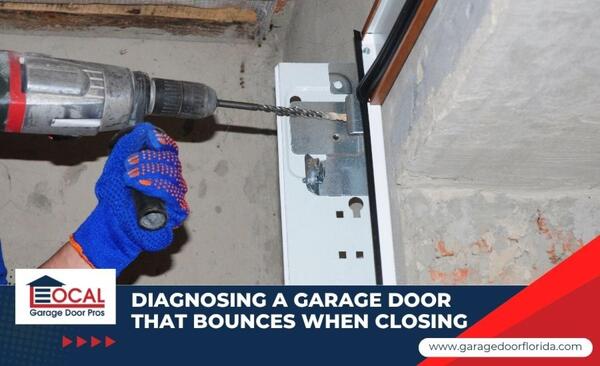
A garage door bounces when closing when the door meets mechanical resistance at the opener, incorrect travel or force settings, a faulty safety sensor, or a binding component near the bottom of its travel path. Left unaddressed, this strains the motor and leaves your home exposed while the door sits open. This guide walks you through diagnosing the exact cause and fixing it safely.
Common Causes of a Bouncing Garage Door
A bouncing or reversing door can indicate physical resistance, incorrect travel or force settings, a safety sensor problem, or another mechanical or opener fault. You can pinpoint the exact issue by examining the components that control the door's downward path:
- Dry or Damaged Rollers: Cracked or unlubricated rollers drag inside the tracks and cause the opener to detect an obstruction.
- Bent or Misaligned Tracks: Warped or shifted tracks pinch the door panels near the floor and force the motor to reverse direction.
- Worn or Broken Springs: Weakened or broken springs can prevent the door from being properly counterbalanced, causing uneven movement, excessive opener strain, or difficulty opening and closing the door.
- Frayed or Slipping Cables: Damaged lifting cables slip off the drums and create uneven tension that unbalances the entire system.
- Older AC Motors: Some older garage door openers use mechanical travel and force adjustment controls that can become incorrectly set or develop problems as components wear. The type of adjustment system depends on the opener model, not only on whether it uses an AC motor.
DIY Temporary Bouncing Garage Door Fixes
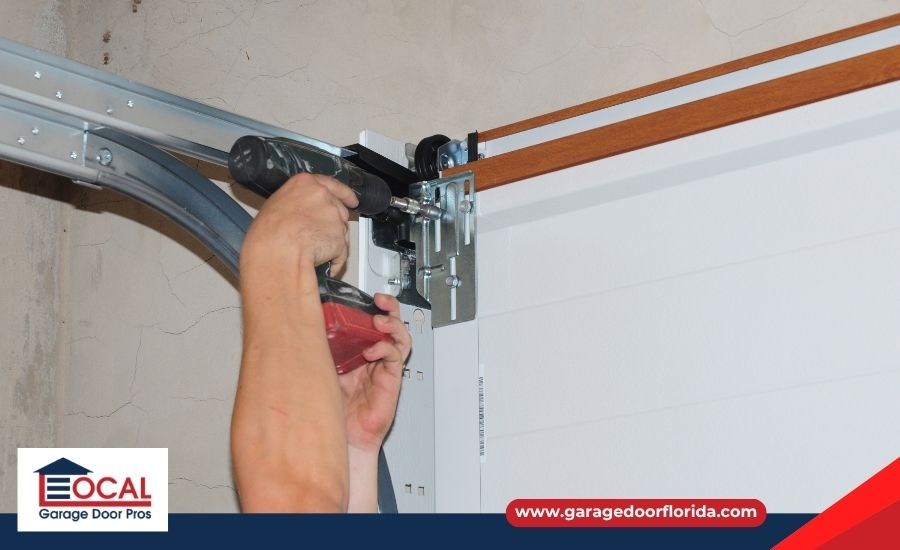
Many garage door issues can be resolved with basic maintenance or electronic adjustments before you replace parts. You can address the underlying mechanical issues by performing these direct maintenance procedures:
- Lubricate the Roller Bearings: Apply a silicone- or lithium-based lubricant directly to the rollers, then wipe away any accumulated dirt.
- Inspect the Metal Tracks: Check the tracks for loose hardware, debris, visible bends, or alignment problems that interfere with roller movement. Tighten accessible loose fasteners, but leave major track realignment or repair work to a trained garage door technician.
- Test the Manual Balance: Check the door balance by pulling the emergency release cord, but do not attempt to tighten or adjust the high-tension steel coils yourself.
- Visually Inspect the Lift Cables: Check the cables thoroughly for slack or damage without touching the high-tension bottom fixtures.
- Recalibrate the Down-Travel Limit Screws: Follow the garage door opener manufacturer's instructions when adjusting the down-travel setting. Make adjustments in small increments because the correct adjustment procedure and direction vary by opener model.
When to Call a Professional Garage Door Technician
Certain garage door components operate under extreme mechanical tension and pose immediate safety risks to untrained homeowners. You should contact a licensed technician immediately if your troubleshooting points to these complex system failures:
- Torsion Spring Replacement and Tensioning: Replacing or adjusting these high-tension steel coils requires specialized winding bars and precise physics to prevent catastrophic failure or severe personal injury.
- High-Tension Cable Re-Spooling: Handling loose, unspooled, or damaged lift cables requires releasing the system tension safely so the heavy garage door does not crash down unexpectedly.
- Structural Track Realignment: Warped, bent, or severely misaligned tracks can restrict door movement and place excessive strain on the opener. A trained technician should inspect the damage and repair, realign, or replace the affected track components as needed.
- Older AC Motor Modernization: Older garage door openers with recurring electrical faults, unreliable travel controls, or significant internal wear may require professional repair or replacement. A technician can determine whether servicing the existing opener or installing a new unit is appropriate.
Secure Your Garage Door System
Addressing a bouncing garage door immediately protects your automated operator from premature failure and keeps your property safe from intruders. While simple track cleaning and limit adjustments can fix minor issues, complex spring and cable problems require trained personnel to protect your system's structural integrity.
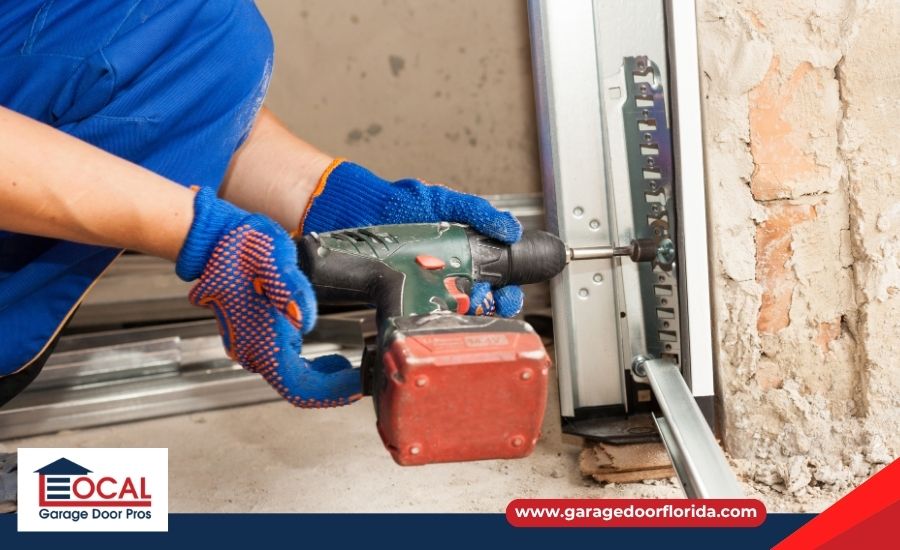
Eliminate erratic safety reversals and secure your garage envelope. Connect with our certified technician to precisely program your opener's digital limits, balance high-tension assemblies, and correct tracking resistance today.
Local Garage Door Pros is a full-service garage door company serving the Clearwater, FL area, specializing in comprehensive garage door repair, new garage door installation, and emergency garage door repair for local homeowners and businesses.
Frequently Asked Questions
Why does my garage door hit the ground and bounce right back open?
This can happen when the opener's down-travel setting is excessive, the door encounters resistance, or another mechanical or opener fault triggers the reversal system. Safety sensors can also cause reversal if their beam is blocked or misaligned while the door is closing.
How do you fix a garage door that reverses immediately after closing?
First, check for obstructions, binding components, misaligned safety sensors, and incorrect travel settings. Follow the opener manufacturer's instructions for adjustments, and contact a technician if the problem continues. If the door continues to reverse due to damage to high-tension components, you must call a specialist.
What controls the down travel limit on a garage door opener?
The down-travel limit is controlled by the garage door opener's travel adjustment system. Depending on the opener model, the system may use mechanical adjustment screws, electronic controls, or programming buttons to set the door's closed position.
Can a bad logic board cause a garage door to bounce when closing?
Yes, a failing logic board can cause incorrect travel behavior, unreliable opener operation, or unexpected reversals on some garage door opener models. A technician should diagnose the opener before the logic board is replaced.
How do I adjust the sensitivity to stop my garage door from bouncing?
First, inspect the door for obstructions, binding components, balance problems, and incorrect travel settings. Follow the opener manufacturer's instructions for any force or travel adjustments, and contact a technician if the door continues to reverse.
Recent Posts
-
Diagnosing a Garage Door That Jerks When Closing
Jul 26, 2026 -

Why is My Garage Door Making a Grinding Noise?
Jul 26, 2026 -
Garage Door Brand Comparison for Resilient Homes
Jul 17, 2026